Taylor Scott-Reimer
Women's Authority, Institutional Leadership, and Theological Reconstruction

Taylor Scott-Reimer is a Canadian author and theological scholar examining biblical authority, women's leadership, and institutional formation in contemporary North American church contexts.
A PUBLIC THEOLOGY FOR RECONSTRUCTION
Churches and educational institutions across North America are navigating polarization around gender, authority, and generational transition. Leadership teams face internal fracture, cultural pressure, and theological uncertainty.
Many institutions address these tensions reactively, without interpretive frameworks capable of sustaining both theological coherence and institutional renewal.
Her work examines:
Theological positioning and neglected biblical foundations
Institutional confidence in women's authority
Durable formation systems
Her work prioritizes theological coherence and institutional sustainability.
CORE AREAS OF WORK
Women in Scripture & Ecclesial Authority: Reexamining contested texts and inherited interpretive traditions shaping ecclesial and academic leadership structures. Recovering the architectural role of women in the biblical narrative and early church.
Digital Culture & Christian Formation: Examining how digital platforms and online ecosystems reshape theological imagination, ecclesial identity, and generational formation.
Informal Leadership & Motherhood: Reframing caregiving networks and domestic spaces as sites of theological authority, cultural transmission, and ecclesial formation.
Institutional Reconstruction: Examining generational transition, theological positioning, and leadership formation across ecclesial and academic institutions.
THE SHE BELIEVED FRAMEWORK
Scott-Reimer's work is organized around a four-movement theological framework informing teaching, consultation, and published scholarship.
Rooted in the Beginning reclaiming theological anthropology, image-bearing, and creation-level authority.
From the Edges examining covenantal agency, protest, and women's leadership from marginal spaces.
Builders and Teachers recovering ecclesial architecture and women's formative authority in the early church.
First Witness — Future Church examining institutional reconstruction through theological frameworks for embodied leadership.
SPEAKING & LEADERSHIP ENGAGEMENTS
Scott-Reimer speaks at conferences, churches, seminaries, and institutional leadership gatherings across denominational contexts.
Formats include:
Keynote addresses
Executive-level leadership forums
Academic lectures
Sermons
Retreat intensives
INSTITUTIONAL COLLABORATION
Scott-Reimer teaches in the Degree Completion Program at Tyndale University and is developing course material on her debut novel, She Believed: Recovering the Fierce Faith of the Women of Scripture — and Ourselves, in partnership with Knox College (University of Toronto).
Her institutional work addresses women's leadership, theological formation, and generational transition.
Collaborative engagements may include:
Leadership team intensives
Theological positioning review
Curriculum and formation architecture
Reconstruction-focused strategy sessions
SELECTED MEDIA & INTERVIEWS
Scott-Reimer has been featured on leadership and ministry platforms addressing biblical authority, institutional resilience, and women's leadership in the Church.
Ministry Forum Podcast — Season 5, Episode 3
A conversation on digital culture, motherhood as leadership, and the future of ecclesial formation.

Reclaiming Silenced Voices:
Women, Scripture & the Church
unSeminary Podcast
A conversation on reframing women’s stories in Scripture, restoring embodied leadership, and building churches where women’s voices are not sidelined but centered.

The Perspective with Mike Sherbino
A televised conversation exploring She Believed, the recovery of women’s voices in Scripture, and why the Church must widen its imagination around leadership, motherhood, and formation.
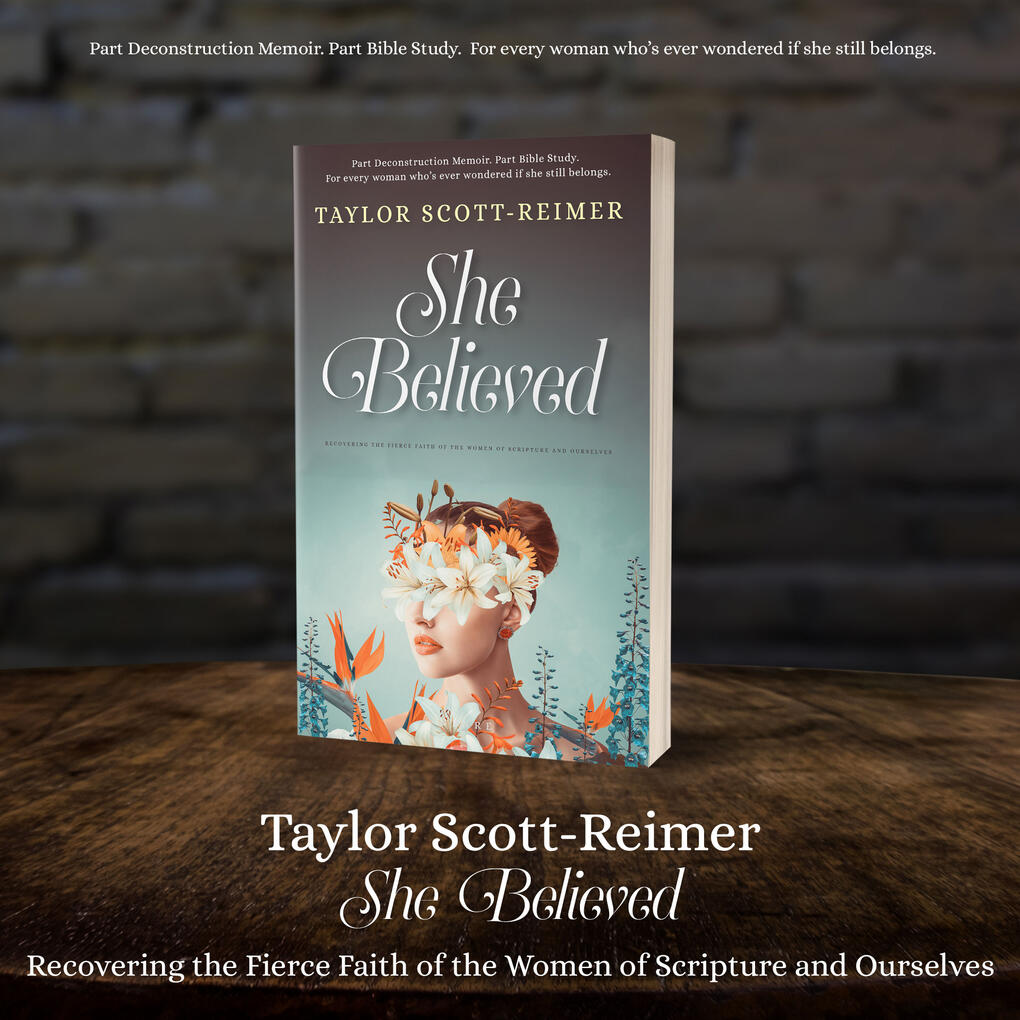
The book reexamines interpretive traditions surrounding biblical women and argues for a recovery of their intellectual, spiritual, and ecclesial authority. Through close textual analysis and narrative theology, Scott-Reimer traces how interpretive habits have obscured women's covenantal agency, prophetic authority, and architectural role in Israel's formation and the early church. The work challenges inherited frameworks that position biblical women as peripheral or passive, demonstrating instead their centrality to theological anthropology, ecclesial structure, and missional identity. She Believed provides both exegetical foundation and theological architecture for institutions rethinking women's leadership in contemporary church contexts.
Author of She Believed: Recovering the Fierce Faith of the Women of Scripture — and Ourselves